
Description
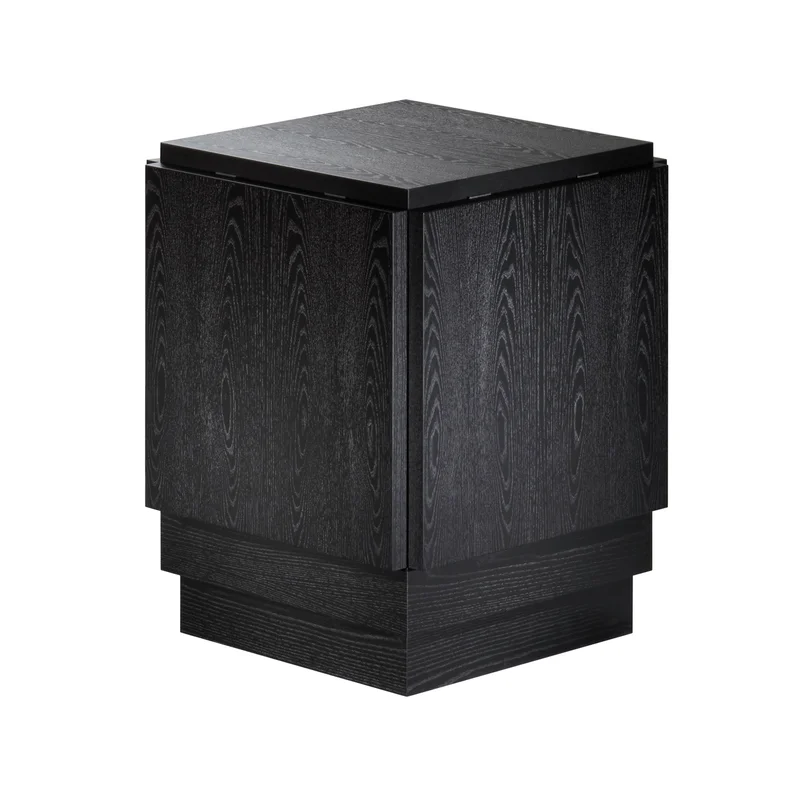
It embodies the original idea of intelligent, space-saving furniture and is thus as contemporary as ever: the M10 table. Erich Brendel designed it in 1924 during the early days of the Weimar Bauhaus.
As a carpenter’s apprentice and Bauhaus student, he was inspired by the striking, cubic forms of Walter Gropius’s director’s office. Brendel then designed a rolling piece of furniture he called the “Tea Table.” When unfolded, it becomes a veritable dining table and takes up a primal form: the Swiss cross with four equal sides at right angles to each other.
The design survived for almost 60 years as a unique piece in the possession of Bauhaus sculptor Karla Luz-Ruland in Aachen. In 1968, the Museum of Modern Art in New York attempted to purchase the table from her. The sculptor declined and, due to her friendly relationship with Tecta, bequeathed the prototype to the company fourteen years later. At the request of Erich Brendel, the unique piece is now on display in the collection of the Cantilever Chair Museum in Lauenförde.
Since 1981, Tecta has been producing the M10 under license and in series, faithfully replicating this 1924 original. The M10 table bears Oskar Schlemmer’s original Bauhaus signet. This, too, brings us full circle: sculptor Karla Luz-Ruland created the famous “Schlemmer figurines” for Oskar Schlemmer for the Triadic Ballet in the 1920s.
Unfoldedmeasurements:
M10 – 57.9″ x 57.9″
K10 – 49.21″ x 49.21″
M10-4 is the same as M10, with 4 additional tabletop pieces.
Reviews
There are no reviews yet.